The most solemn of all the days of our life is the day we die. It is judgment day, the great sacred day of transfiguration. Have you really seriously given a fleeting thought to that grave and mighty last hour we shall spend on earth?
Continue readingTraditional fairy tales
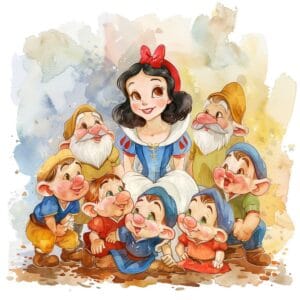
Traditional fairy tales, these are beautiful tales that have been loved by children and their parents for hundreds of years. Perhaps the language has been dusted off a little, but Hansel always steals the gingerbread and Snow White always gets a kiss from the prince. A good ending is also traditional in fairy tales!
The neighbouring families
One would have thought that something important was going on in the duck-pond, but it was nothing after all. All the ducks lying quietly on the water or standing on their heads in it– for they could do that– at once swarm to the sides; the traces of their feet were seen in the wet earth, and their cackling was heard far and wide.
Continue readingThe sweathearts (Top and Ball)
A whipping top and a little ball lay together in a box, among other toys, and the top said to the ball, “Shall we be married, as we live in the same box?”
Continue readingThe little mermaid
Far out in the ocean, where the water is as blue as the prettiest cornflower, and as clear as crystal, it is very, very deep; so deep, indeed, that no cable could fathom it: many church steeples, piled one upon another, would not reach from the ground beneath to the surface of the water above.
Continue readingGod’s food
There were once upon a time two sisters, one of whom had no children and was rich, and the other had five and was a widow, and so poor that she no longer had food enough to satisfy herself and her children. In her need, therefore, she went to her sister, and said, “My children and I are suffering the greatest hunger; thou art rich, give me a mouthful of bread.” The very rich sister was as hard as a stone, and said, “I myself have nothing in the house,” and drove away the poor creature with harsh words. After some time the husband of the rich sister came home, and was just going to cut himself a piece of bread, but when he made the first cut into the loaf, out flowed red blood. When the woman saw that she was terrified and told him what had occurred. He hurried away to help the widow and her children, but when he entered her room, he found her praying. She had her two youngest children in her arms, and the three eldest were lying dead. He offered her food, but she answered, “For earthly food have we no longer any desire. God has already satisfied the hunger of three of us, and he will hearken to our supplications likewise.” Scarcely had she uttered these words than the two little ones drew their last breath, whereupon her heart broke, and she sank down dead.
Continue readingThe peasant and the devil
There was once on a time a far-sighted, crafty peasant whose tricks were much talked about. The best story is, however, how he once got hold of the Devil, and made a fool of him.
Continue readingThe bittern and the hoopoe
“Where do you like best to feed your flocks?” said a man to an old cow-herd. “Here, sir, where the grass is neither too rich nor too poor, or else it is no use.” – “Why not?” asked the man. “Do you hear that melancholy cry from the meadow there?”
Continue readingThe sparrow and his four children
A sparrow had four young ones in a swallow’s nest. When they were fledged, some naughty boys pulled out the nest, but fortunately all the birds got safely away in the high wind. Then the old bird was grieved that as his sons had all gone out into the world, he had not first warned them of every kind of danger, and given them good instruction how to deal with each. In the autumn a great many sparrows assembled together in a wheatfield, and there the old bird met his four children again, and full of joy took them home with him. “Ah, my dear sons, what pain I have been in about you all through the summer, because you got away in the wind without my teaching; listen to my words, obey your father, and be well on your guard. Little birds have to encounter great dangers!” And then he asked the eldest where he had spent the summer, and how he had supported himself? “I stayed in the gardens, and looked for caterpillars and small worms, until the cherries got ripe.” – “Ah, my son,” said the father, “tit-bits are not bad, but there is great risk about them; on that account take great care of thyself henceforth, and particularly when people are going about the gardens who carry long green poles which are hollow inside and have a little hole at the top.” – “Yes, father, but what if a little green leaf is stuck over the hole with wax?” said the son. “Where hast thou seen that?” – “In a merchant’s garden,” said the youngster. “Oh, my son, merchant folks are quick folks,” said the father. “If thou hast been among the children of the world, thou hast learned worldly shiftiness enough, only see that thou usest it well, and do not be too confident.” After this he asked the next, “Where hast thou passed thy time?” – “At court,” said the son. “Sparrows and silly little birds are of no use in that place — there one finds much gold, velvet, silk, armour, harnesses, sparrow-hawks, screech-owls and hen-harriers; keep to the horses’ stable where they winnow oats, or thresh, and then fortune may give thee thy daily grain of corn in peace.” – “Yes, father,” said the son, “but when the stable-boys make traps and fix their gins and snares in the straw, many a one is caught fast.” Where hast thou seen that?” said the old bird. “At court, among the stable-boys.” – “Oh, my son, court boys are bad boys! If thou hast been to court and among the lords, and hast left no feathers there, thou hast learnt a fair amount, and wilt know very well how to go about the world, but look around thee and above thee, for the wolves devour the wisest dogs.” The father examined the third also: “Where didst thou seek thy safety?” – “I have broken up tubs and ropes on the cart-roads and highways, and sometimes met with a grain of corn or barley.” – “That is indeed dainty fare,” said the father, “but take care what thou art about and look carefully around, especially when thou seest any one stooping and about to pick up a stone, there is not much time to stay then.” – “That is true,” said the son, “but what if any one should carry a bit of rock, or ore, ready beforehand in his breast or pocket?” – “Where hast thou seen that?” – “Among the mountaineers, dear father; when they go out, they generally take little bits of ore with them.” – “Mountain folks are working folks, and clever folks. If thou hast been among mountain lads, thou hast seen and learnt something, but when thou goest thither beware, for many a sparrow has been brought to a bad end by a mountain boy.” At length the father came to the youngest son: “Thou, my dear chirping nestling, wert always the silliest and weakest; stay with me, the world has many rough, wicked birds which have crooked beaks and long claws, and lie in wait for poor little birds and swallow them. Keep with those of thine own kind, and pick up little spiders and caterpillars from the trees, or the house, and then thou wilt live long in peace.” – “My dear father, he who feeds himself without injury to other people fares well, and no sparrow-hawk, eagle, or kite will hurt him if he specially commits himself and his lawful food, evening and morning, faithfully to God, who is the Creator and Preserver of all forest and village birds, who likewise heareth the cry and prayer of the young ravens, for no sparrow or wren ever falls to the ground except by his will.” – “Where hast thou learnt this?” The son answered, “When the great blast of wind tore me away from thee I came to a church, and there during the summer I have picked up the flies and spiders from the windows, and heard this discourse preached. The Father of all sparrows fed me all the summer through, and kept me from all mischance and from ferocious birds.”
“In sooth, my dear son, if thou takest refuge in the churches and helpest to clear away spiders and buzzing flies, and criest unto God like the young ravens, and commendest thyself to the eternal Creator, all will be well with thee, and that even if the whole world were full of wild malicious birds.”
Simeli mountain
There were once two brothers, the one rich, the other poor. The rich one, however, gave nothing to the poor one, and he gained a scanty living by trading in corn, and often did so badly that he had no bread for his wife and children. Once when he was wheeling a barrow through the forest he saw, on one side of him, a great, bare, naked-looking mountain, and as he had never seen it before, he stood still and stared at it with amazement.
While he was thus standing he saw a twelve great, wild men coming towards him, and as he believed they were robbers he pushed his barrow into the thicket, climbed up a tree, and waited to see what would happen. The twelve men, however, went to the mountain and cried, “Semsi mountain, Semsi mountain, open,” and immediately the barren mountain opened down the middle, and the twelve went into it, and as soon as they were within, it shut. After a short time, however, it opened again, and the men came forth carrying heavy sacks on their shoulders, and when they were all once more in the daylight they said, “Semsi mountain, Semsi mountain, shut thyself;” then the mountain closed together, and there was no longer any entrance to be seen to it, and the twelve went away.
Ferdinand the faithful
Once on a time lived a man and a woman who so long as they were rich had no children, but when they were poor they had a little boy. They could, however, find no godfather for him, so the man said he would just go to another place to see if he could get one there. As he went, a poor man met him, who asked him where he was going. He said he was going to see if he could get a godfather, that he was poor, so no one would stand as godfather for him. “Oh,” said the poor man, “you are poor, and I am poor; I will be godfather for you, but I am so ill off I can give the child nothing. Go home and tell the nurse that she is to come to the church with the child.”
When they all got to the church together, the beggar was already there, and he gave the child the name of Ferdinand the Faithful.